How to thaw a frozen boiler condensate pipe
July 2, 2024

The cold winter months are the time we most rely on our boilers to provide our heating and hot water. But as the temperature falls below zero, the condensate pipe on our boilers can become more susceptible to freezing, causing the boiler to shut down. 

Here we explain how to identify frozen condensate pipe symptoms, tell you how to thaw your condensate pipe and how to stop your boiler condensate pipe from freezing in the future. Use our simple guide to get your boiler working again.


Where is the condensate pipe?

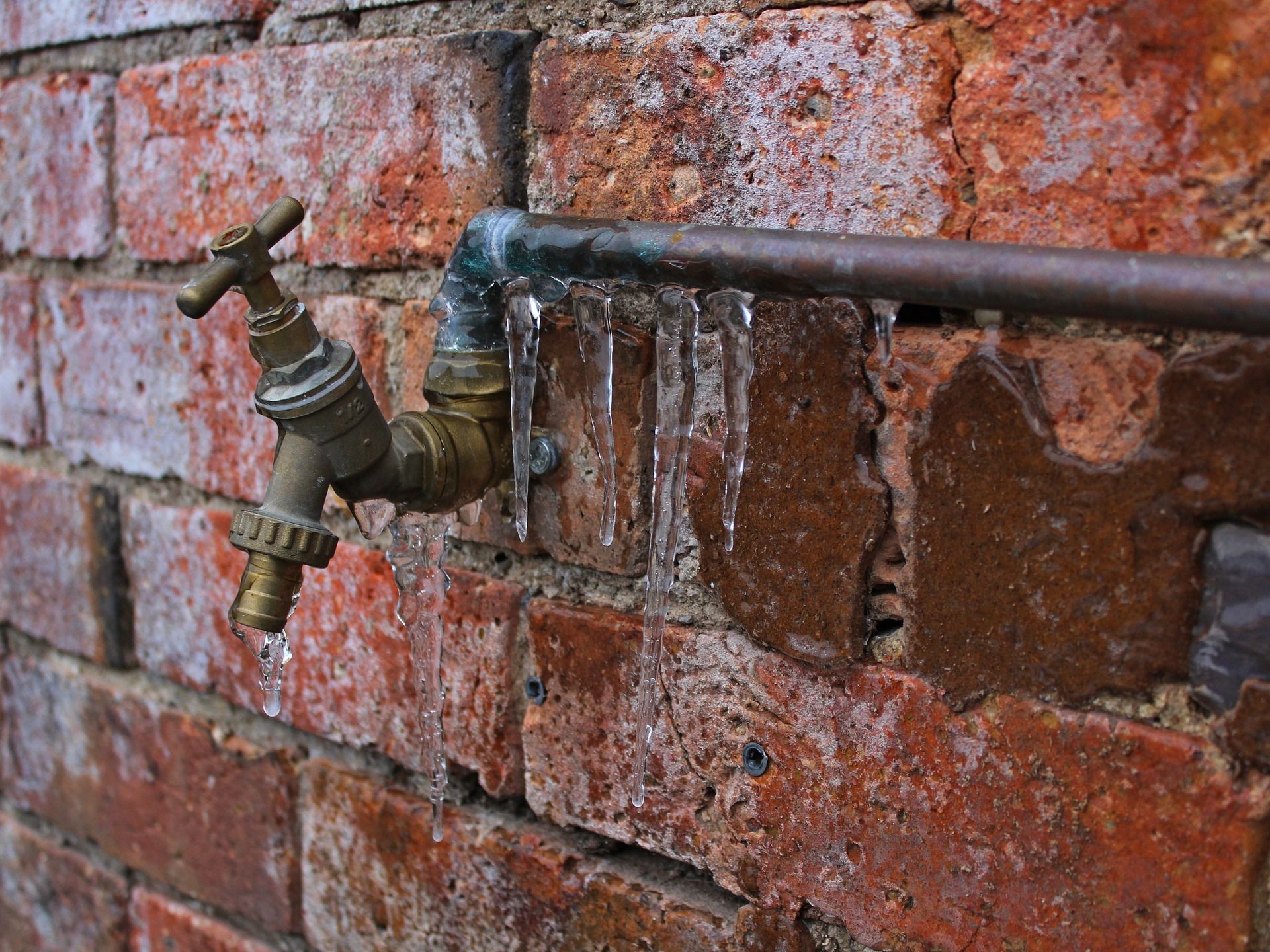
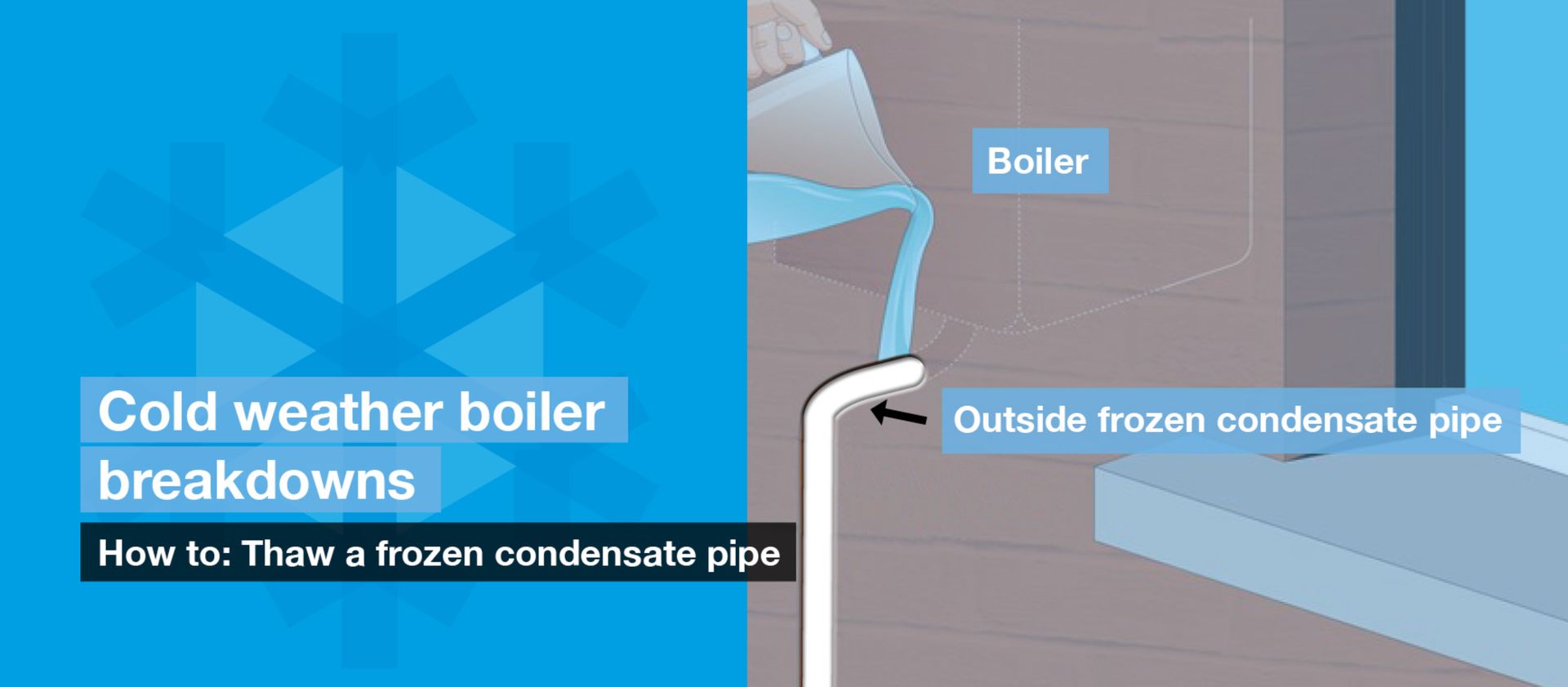
Usually, the condensate pipe runs from the boiler to a drain under a sink but do check to see if it runs along the outside of a wall at any point. In some cases, it may have been routed through the wall and into an external drain. The part of the pipe that is outside is most likely to freeze when temperatures start to plummet.


If your boiler is located in an unheated part of the house, for example in the garage or out-house, you should treat the condensate pipe as if it was outside.


How to tell if the condensate pipe has frozen

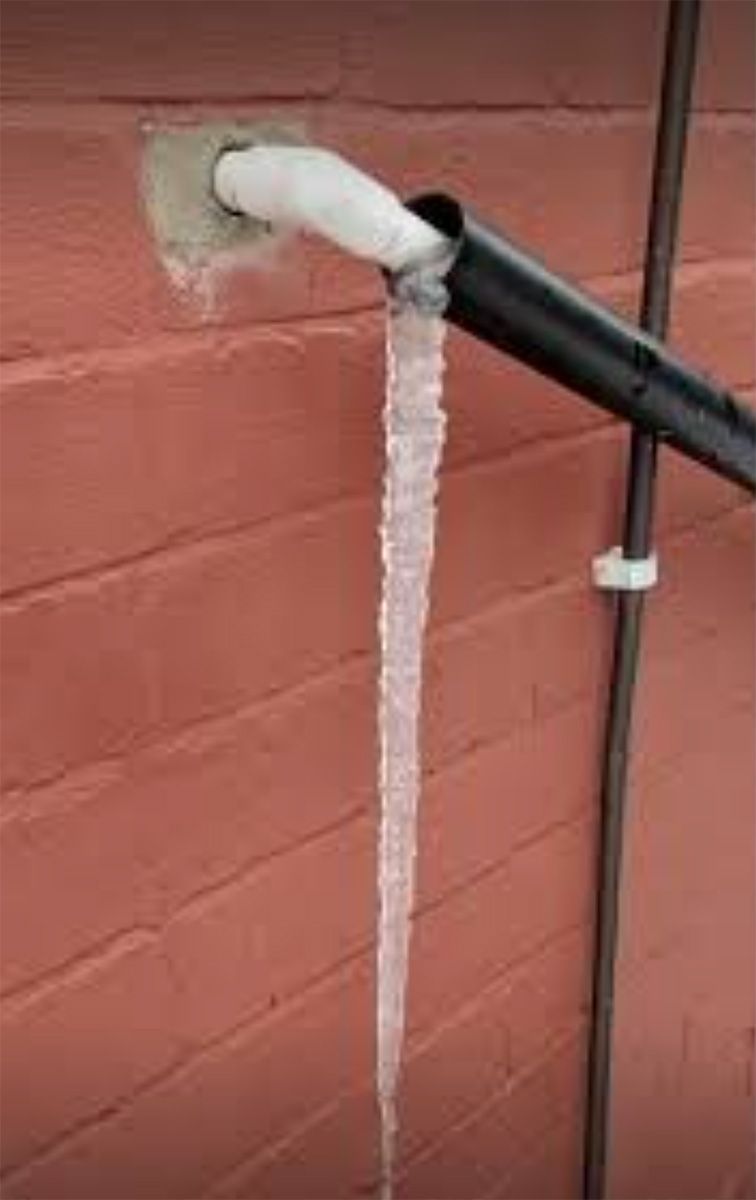
If the condensate pipe has frozen, you may hear gurgling noises coming from your heating system, and the boiler will shut down.  This is a failsafe mechanism to protect the boiler from water going back up the pipe and inside the boiler, causing damage to the electrics etc.


In most cases, the boiler will display an error code.


Baxi boilers: the error code will be E133, E128 or E28. The display will alternate between E1 and 33.

Worcester Bosch: Fault code - D5, Fault code - EA, Flashing or persistent blue light, Flashing or persistent red light (Worcester CDi)

Ideal boilers: Fault codes L2 or F2

Vaillant: Fault codes F28 or F29

Viessmann code F4
What is a condensate pipe?

The condensate pipe is a small, usually white, plastic pipe that comes out of the bottom of your boiler.  directly outside where your boiler is located. The condensate pipe It carries the ‘condensate’, which is the liquid produced when all the heat has been taken out of the gas that has burned to provide heating and hot water, to a drain.

How to thaw a frozen condensate pipe

It is simple to defrost your condensate pipe and you shouldn’t need to call HARNCE Heating & Plumbing. Please wrap up warm and take care not to slip on the frozen ground.


Locate the blockage

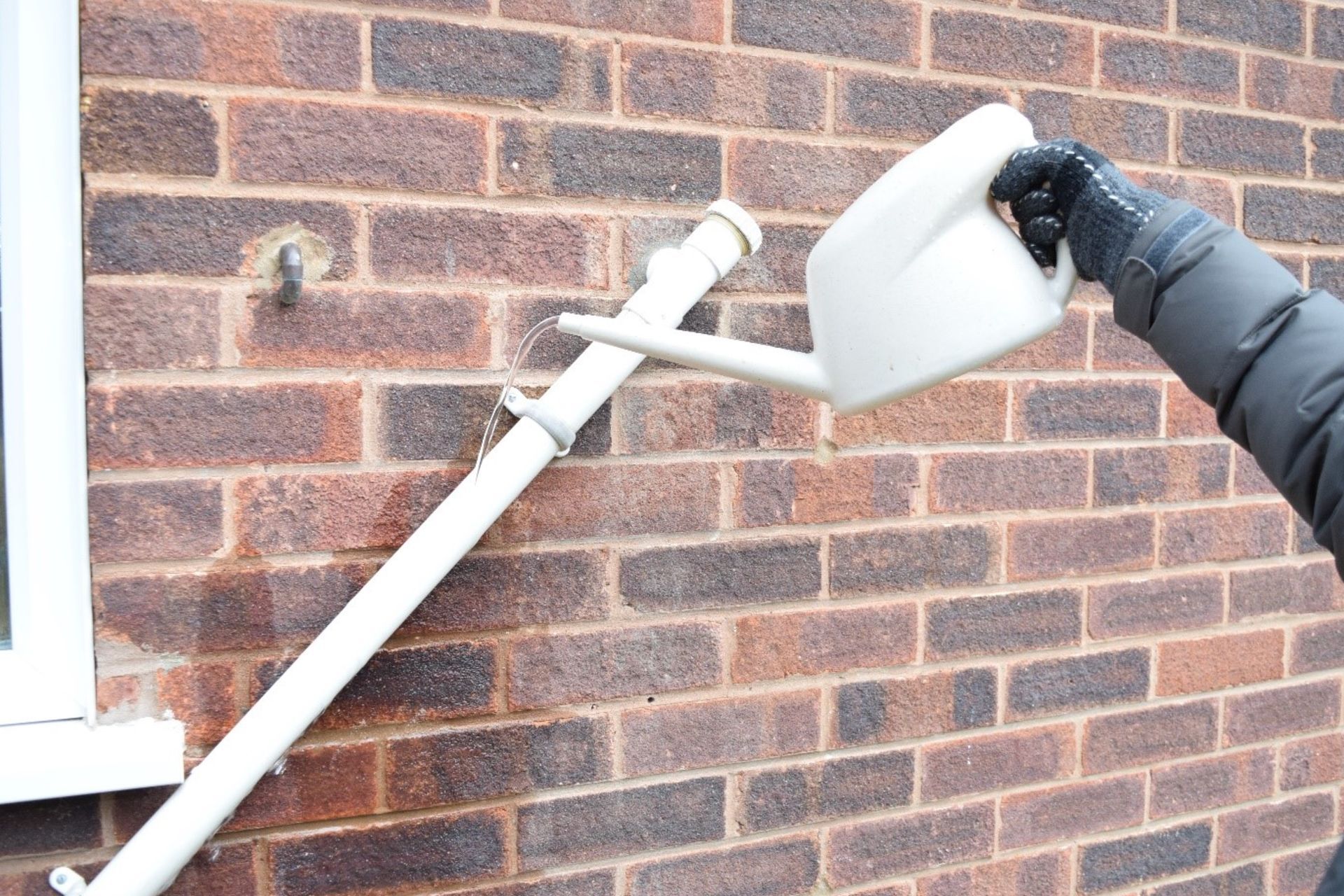
This is likely to be where the pipe is most exposed, outside the building and probably at its end or at a bend or dip in the pipe where the condensate could collect and freeze.


Thaw the pipe

You can use a hot water bottle or a microwaveable heating pack (the sort used for muscular aches and pains) or a cloth soaked in hot water. You can also pour hot, but NOT boiling, water onto the blockage, but remember that the water may freeze on the ground and make it slippery.


Re-set or re-start the boiler

Once the blockage has cleared, check the boiler operating instructions or the manufacturer’s website for guidance on any action needed to clear the fault code or alarm and re-start the boiler. If it still doesn’t work, you should call a Gas Safe engineer to come and look at it for you.

Watch our video below that will help you thaw your frozen condensate pipe below.


How to prevent the condensate pipe from freezing again

Once the condensate pipe is thawed and you have successfully restarted your boiler, you can lag the pipe with waterproof and weatherproof lagging to help prevent it re-freezing.


As a temporary measure, it may help to turn the boiler thermostat (not the room thermostat) to maximum and run the boiler in ‘continuous’ mode, turning the room thermostat to 15°C at night.  Turn back to the normal settings once the cold spell is over.


In the longer term, in order to prevent the pipe freezing again, you can ask your Gas Safe registered installer to move the pipe so that it runs internally.  Or, you could ask them fit a wider pipe, lag it to reduce the risk of freezing, install a trace heater along the pipe which warms it slightly when temperatures drop to freezing, or a combination of all of these.


British Standards, Building Regulations and boiler manufacturers’ instructions all provide information and recommendations that can advise your installer on how to run the pipe to reduce the risk of freezing.


Condensate pipe installation is also included in the Benchmark checklist that your installer should go through with you when he has completed your boiler installation.

Tapping into Talent - Capture 24 Photography

By Mathew Hance January 30, 2026
I run HARNCE, a heating and plumbing business working across Lichfield and the surrounding areas. I wrote this because the local conversation about housebuilding often feels like two sides shouting past each other. On one side, plenty of residents feel there is already too much development. They worry about congestion, pressure on services, and the place feeling less like the Lichfield they recognise. On the other side sits a quieter reality. The planning machinery keeps moving. Current Local Plan work references an increased housing requirement of 745 dwellings per year . ( democracy.lichfielddc.gov.uk ) The Council’s latest five-year housing land supply document also sets out the Local Housing Need at 746 dwellings per annum . ( Lichfield District Council ) That number is the part that matters for my trade. Not because it proves a political point, but because it implies a large and continuous flow of new homes, and therefore a large and continuous flow of new heating and hot water systems being installed, commissioned, and handed over. The uncomfortable truth I keep seeing in “brand new” homes New homes often look immaculate. Fresh paint, clean bathrooms, shiny controls on the wall. But the heating system sits behind cupboard doors and boxing, and the handover tends to focus on the obvious snags. We are attending more and more new homes where the heating and hot water setup is simply not right for the property, or not installed and commissioned to a standard that matches what buyers reasonably expect. In the real world, that often shows up as: Rooms heating unevenly, or one part of the house lagging behind Hot water performance that does not match household routines Controls that are confusing, poorly configured, or left in generic settings Running costs that feel out of step with what “efficient” was supposed to mean Ventilation treated as an afterthought, increasing damp and mould risk over time Some of this is design choice. Some of it is rushed installation. A lot of it comes down to commissioning and setup, which is the least glamorous part of a build, and one of the most important. Why this matters now, not later Nationally, gas remains dominant. The English Housing Survey reports that 86% of households used a gas-fired main heating system in 2023 to 2024 . ( GOV.UK ) So even if you are not trying to be “green”, most homes still depend on how well a gas system is designed, installed, and maintained. At the same time, households are still sensitive to energy costs. Ofgem’s price cap for 1 January to 31 March 2026 is £1,758 per year for a typical dual-fuel household paying by Direct Debit. ( Ofgem ) Then add the direction of travel on decarbonisation. The Climate Change Committee notes that only 13% of new builds completed in 2024 had a heat pump, while 71% still had a fossil fuel boiler. ( Climate Change Committee ) Whether you like that or not, it suggests many new homes are still being built around choices that could become expensive to change later. Finally, comfort is no longer just a winter topic. A House of Commons Environmental Audit Committee report highlights that millions of UK homes experience summertime overheating and points to the challenge of heat resilience in homes. ( UK Parliament Committees ) If homes get tighter to reduce heat loss, ventilation and design choices start to matter more, not less. My practical point for buyers: treat heating like a surveyable risk If you are buying a new home, a plumbing and heating survey can be a simple way to reduce unpleasant surprises. Ours can cost as little as £90 , and it can be used to identify issues early, while you still have leverage to get them corrected. A focused survey can help you answer basic questions that often get skipped in the excitement of a new purchase: Is the system sized appropriately for the property and likely demand Is there evidence of proper commissioning and quality checks Are controls set up to run efficiently, or simply left on default Is the hot water setup realistic for how people live, not just how brochures read Are ventilation provisions sensible for moisture-heavy rooms If you want to see what we check, it is here: Pre-Purchase Plumbing Surveys If you want a planned approach rather than reactive call-outs, these pages may help: Boiler Servicing and Heating Maintenance HARNCE Homeowner Club Membership Closing thought People may disagree about whether Lichfield should be building at this pace. That debate is not going away. But if hundreds of homes a year are being delivered, the least we can do is raise the standard of the parts buyers have to live with every day. Build numbers may dominate headlines. Heating quality tends to show up later, in cold corners, confusing controls, and bills that do not feel fair. Those are avoidable outcomes, and they start with asking better questions, earlier.  References Lichfield District Council, Cabinet Report April 2025, Local Plan Update (PDF). ( democracy.lichfielddc.gov.uk ) Local Plan Update Cabinet report (April 2025) Lichfield District Council, Five Year Housing Land Supply 2025 (PDF). ( Lichfield District Council ) Five Year Housing Land Supply 2025 GOV.UK, English Housing Survey 2023 to 2024: Low carbon technologies fact sheet. ( GOV.UK ) EHS low carbon technologies 2023 to 2024 Climate Change Committee, Progress in reducing emissions: 2025 report to Parliament. ( Climate Change Committee ) CCC progress report 2025 Ofgem, Energy price cap explained (Q1 2026 figure). ( Ofgem ) Ofgem energy price cap explained House of Commons Environmental Audit Committee, Heat resilience and sustainable cooling (PDF). ( UK Parliament Committees ) Heat resilience and sustainable cooling report
By Kristen Lackajis January 28, 2026
If you’re a landlord, you need to meet legal requirements regarding gas safety to keep your tenants safe.
By Kristen Lackajis January 27, 2026
Living in a mould-infested environment isn't just uncomfortable - it's dangerous!
By Kristen Lackajis December 19, 2025
A few quick fixes to try if your boiler cuts out over the festive period!
By Kristen Lackajis November 13, 2025
Quick and easy ways to keep the cold out this winter!
By Kristen Lackajis November 13, 2025
The months of November to February are the busiest for UK plumbers!
By Tina Hart Preto October 6, 2025
An annual boiler service is so much more than just a tick box – it’s an essential household maintenance task, and there’s never been a better time to book in to get it done! The autumn months are the ideal time to have your boiler serviced as it ensures that your system is running safety and efficiently ahead of the colder months, which helps prevent a heating breakdown when you most need a warm home. September/October is also a great time as it beats the winter rush for busy engineers, and can also help keep your energy costs down as your boiler and heating system will be running at its maximum efficiency. At Harnce Heating and Plumbing, we’re only ever a phone call away and our team of dedicated, gas certified engineers are committed to ensuring your home is safe, warm and as cost effective as it can possibly be. Signs You Need A Boiler Service: Radiators are taking longer to heat up or not getting up to temperature Boiler is making funny noises Low system pressure Boiler pilot light goes out frequently Boiler locking out or showing fault codes on panel You’ve moved into a new property and don’t know the last service date It has been 12 months or longer since your last boiler service Whether you require a one-off service, or regular maintenance through our popular Members’ Club subscription, Harnce is always on-hand to help. Contact the office on 01543 330 555 or book online via the website www.harnce.co.uk. Find out more about our Members’ Club benefits at www.harnce.co.uk/membersclub .
By Tina Hart Preto June 19, 2025
As a community focused business, we love working with exceptional local talent and supporting other family businesses, like ourselves.
By Tina Hart Preto May 30, 2025
As a community focused business, we love working with exceptional local talent and supporting charities wanting to good for our community 
Photo of a burst pipe.
By Tina Hart Preto May 8, 2025
Plumbing and heating issues always strike at the worst times. Here’s how HARNCE helps you stay calm, confident, and covered—no matter when it happens.